When Benson Boone Sang Adele’s “When We Were Young,” Columbus Fell Silent, And A Memory Was Born
There are moments at concerts when time seems to pause, when thousands of people suddenly lean forward at once, sensing something special is about to unfold. That’s exactly what happened in Columbus, Ohio, when Benson Boone stepped onto the glowing red runway stage and quietly began a cover of When We Were Young by Adele.
It wasn’t announced. It wasn’t hyped. It simply happened.
And within seconds, the arena transformed.
Bathed in warm red light, Boone stood alone at the edge of the stage, microphone in hand, surrounded by a sea of fans whose phones rose almost instinctively into the air. The energy shifted from concert excitement to collective stillness, the kind of hush that only arrives when an artist dares to be vulnerable in front of thousands.
Choosing to cover “When We Were Young” is no small decision. Adele’s ballad is widely regarded as one of the most emotionally demanding songs of the modern era, built on nostalgia, longing, and the fragile beauty of memory. It asks not only for vocal control but emotional honesty, the ability to make listeners feel as though they are revisiting their own past.
From the first line, Boone understood the assignment.
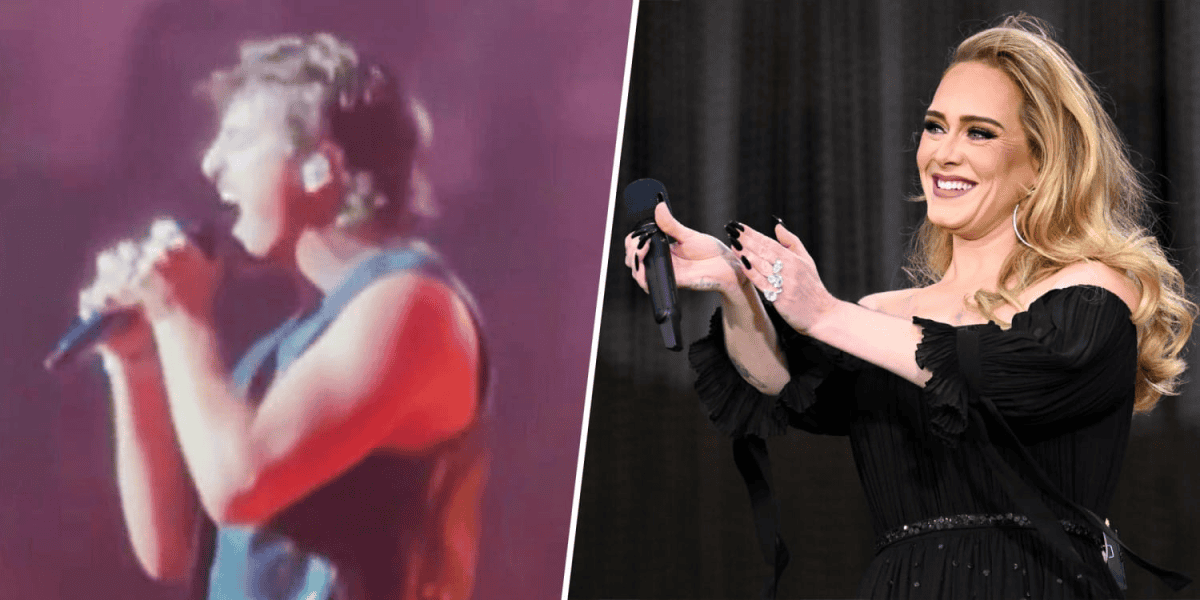
He didn’t try to replicate Adele’s towering delivery. Instead, he approached the song with restraint, letting softness carry the weight. His voice hovered gently over the melody, drawing the crowd closer rather than pushing outward. The massive arena suddenly felt intimate, as if each listener had been invited into a private moment rather than a public performance.
Visually, the staging amplified this intimacy. The illuminated runway placed Boone within reach of the audience, not above them. Fans lined both sides, faces glowing in phone screens, capturing what they already sensed was becoming a memory worth keeping.
As the song unfolded, Boone’s signature vocal texture, youthful yet textured with emotion, added a fresh dimension to the classic. Where Adele’s version feels like a reflective sigh across years, Boone’s felt like someone experiencing those emotions in real time. There was a quiet urgency beneath the notes, a sense that he wasn’t just performing nostalgia but discovering it.
The audience responded in kind.
Rather than singing loudly over him, many listened. You could see it in the stillness, the focused gazes, the phones held steady instead of waving wildly. It became less about spectacle and more about shared feeling, thousands of people collectively transported into their own memories while watching Boone create a new one onstage.
When the chorus arrived, the performance expanded without losing its intimacy. Boone allowed his voice to rise, filling the arena while maintaining that fragile emotional thread. The red lighting deepened, the haze softened the edges of the crowd, and for a moment, the performance felt suspended between past and present, exactly where the song itself lives.
Moments like this reveal something important about Benson Boone’s artistry.
While many young pop performers rely on choreography, visuals, or production to create impact, Boone continues to lean into emotional storytelling. His willingness to slow a show down, to stand still and let a song breathe, speaks to a performer confident enough to trust connection over spectacle. Covering “When We Were Young” wasn’t just a tribute, it was a statement about the kind of artist he is becoming.
It also explains why clips of the performance resonate online. The ingredients are timeless: a beloved song, an unexpected cover, authentic delivery, and an audience visibly moved. But beyond virality, the performance holds something deeper, the reminder that live music’s greatest power isn’t volume or scale, but shared emotion. By the final notes, applause returned the arena to reality. Yet the feeling lingered.
Because the irony of “When We Were Young” is that every time it’s sung, it creates a new memory about remembering old ones. In Columbus, Benson Boone didn’t just perform a cover. He added another chapter to the song’s emotional history, one carried home by thousands who witnessed it.