ACCORDIONMAN and Arlette Billerey Bring Bella Ciao to the Street
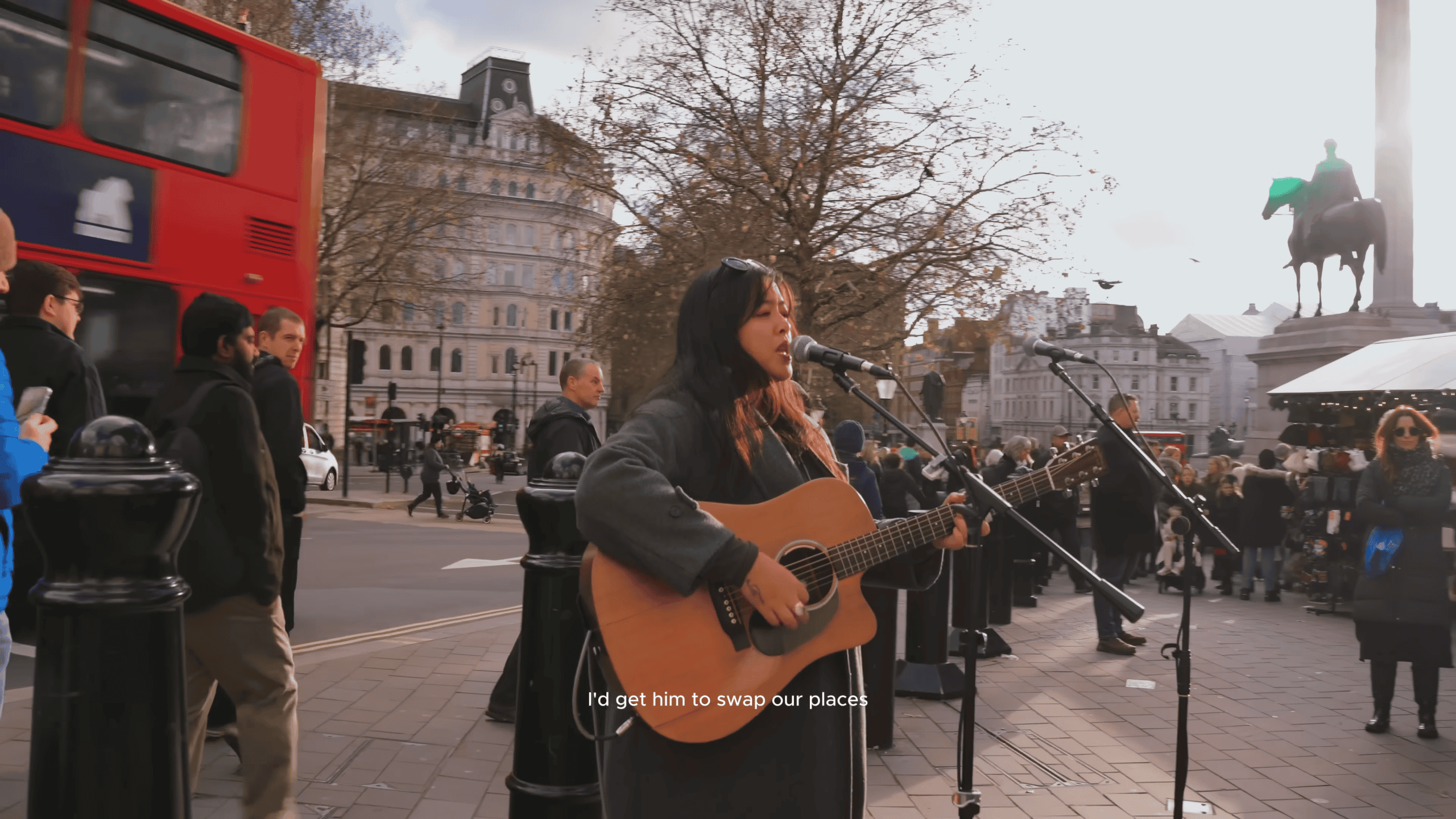
ACCORDIONMAN and cellist Arlette Billerey bring Bella Ciao into the middle of a busy public square, pairing digital accordion with electric cello for a lively street performance. The two instruments give the familiar melody a fresh sound, with Serhii Shamrai driving the rhythm while Arlette’s bowed lines add warmth and drama.
The combination of instruments is the first thing that makes this performance stand out.
Serhii’s accordion carries much of the pulse, keeping Bella Ciao moving with a bright, rhythmic energy. Arlette’s electric cello fills the spaces around him, sometimes following the melody and sometimes adding longer, sweeping notes that give the tune a more dramatic edge.
They also look completely engaged with each other. Rather than simply standing side by side and playing their own parts, they turn toward one another, respond to the music, and let the performance feel like a conversation.
That interaction matters in a street setting. There is no stage lighting or elaborate production to create excitement. The two instruments, the open square, and the musicians’ chemistry have to carry the moment.
They do.
Serhii Shamrai, better known as ACCORDIONMAN, is a Ukrainian accordionist who has built a large international following by showing just how versatile the instrument can be.
He began playing accordion at 12 and later studied formally in Zaporizhzhia and at the Tchaikovsky National Music Academy of Ukraine in Kyiv.
His performances move easily between folk, classical, pop, and modern arrangements. Using a Roland FR-8x digital accordion, he can create a much wider range of sounds than many listeners might expect from the instrument.
That modern approach fits Bella Ciao especially well. The melody has deep folk roots, but Serhii gives it a sharper, more contemporary sound without losing the character that makes it instantly recognizable.
His wider career follows the same idea. He co-founded the B&B Project with bandura player Tetiana Mazur and has built a global audience through performances that place traditional instruments in fresh settings.
The cheerful movement of the melody hides a serious history.
Bella Ciao became closely associated with Italian partisans who fought Nazi occupation and fascism during World War II. That resistance connection gives the song a meaning far beyond its catchy refrain.
There is also an intriguing accordion link in its earlier musical history. The Guardian has reported that the oldest known recording of a melody resembling Bella Ciao dates to 1919 and features Mishka Ziganoff, an Odesa-born klezmer accordionist.
That does not mean Ziganoff recorded the modern song exactly as we know it today, but the connection is fascinating nonetheless.
More than a century later, another accordionist from the same broader region is carrying the tune into a completely different setting.
The strength of this version is not just the history behind Bella Ciao. It is how naturally Serhii and Arlette make the song feel alive in the present.
The electric cello gives the melody color and emotion, the accordion keeps everything moving, and the public square keeps the performance open and spontaneous.
People pass by while the music continues, but the two musicians remain locked into each other. That gives the clip its personality.
A resistance song with deep roots becomes a modern street duet between two musicians clearly enjoying the exchange.
ACCORDIONMAN’s recorded version of Bella Ciao is also available across major streaming platforms.
More music and updates from ACCORDIONMAN are available on his official Facebook page.