When Eric Clapton Meets Stevie Wonder At The Crossroads(Live Performance)
The lights sit low, the crowd hums, and two legends step into the same glow. In this live cut of “Crossroads”, Eric Clapton and Stevie Wonder share a stage and turn a simple blues moment into something that feels rare and human.
There is a soft pause before the song kicks in, the kind that makes a whole arena feel small. Then the first notes land, clean and sharp, and the room shifts from waiting to wide awake.
Eric Clapton stands at the center of this show. He is a British guitarist and singer, known for a clear blues tone, soulful solos, and decades of classic records. His name sits on the banner of this event, Eric Clapton’s Crossroads 2023, held at Crypto.com Arena in Los Angeles on September 24, 2023.
Stevie Wonder joins him as a guest, and the crowd knows it right away. Stevie is one of the most loved American singers, songwriters, and multi‑instrumentalists of all time. He brings a warm presence, a deep sense of rhythm, and that familiar voice that can fill a space in a few notes.
Both artists have long careers, but here, they feel present and in the moment. No big speeches, no long setup, just music shared face to face with a live crowd that hangs on every sound.
Featured Performance: Inside This “Crossroads” Live Moment
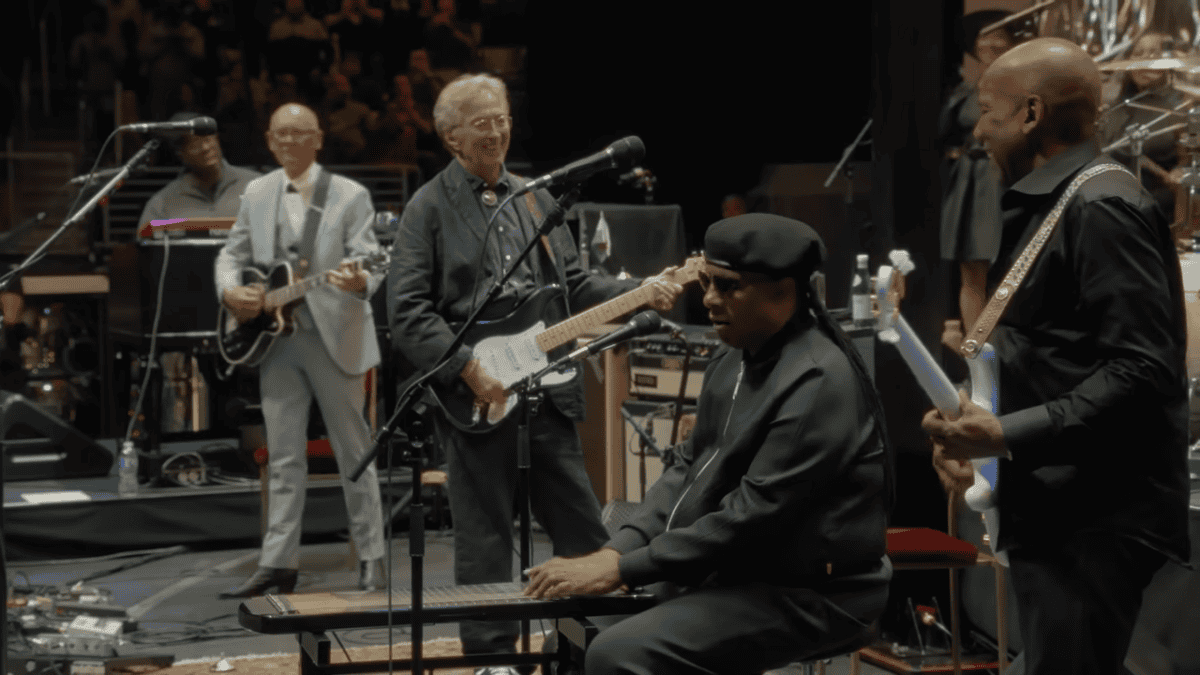
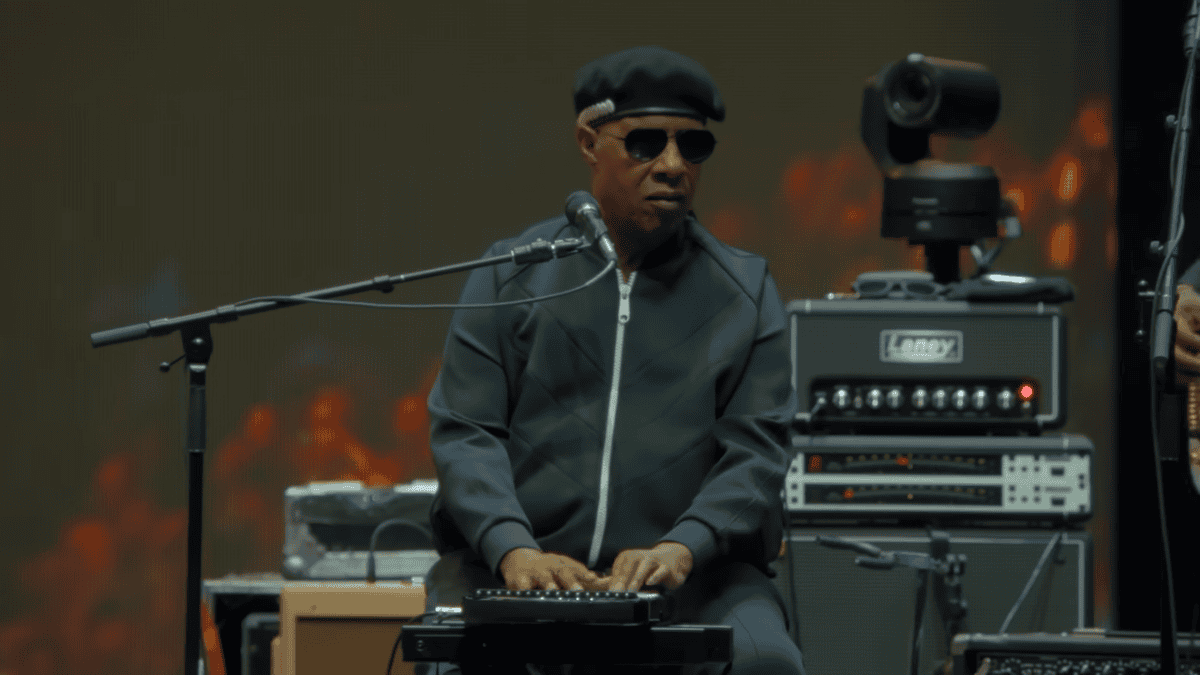
The video captures a live performance of “Crossroads” at Eric Clapton’s Crossroads 2023 show. From the first frame, the focus sits on the music, not on fancy cuts or effects. The camera catches Clapton at his guitar and Stevie Wonder at the Harpejji, with the band locked in behind them.
The song starts as a classic electric blues, with Clapton’s guitar owning the first few lines. His tone is tight and focused, and each note cuts through the mix. The band keeps a steady pulse under him, giving the song a strong, walking feel. The crowd noise fades into the back as the groove settles into place.
What makes this clip stand out is how natural the blend of talents feels. Clapton handles the lead guitar and much of the vocal, while Stevie answers with phrases on the Harpejji and joins in with lines and shouts that lift the room. Nothing feels rushed. Each player seems to listen closely to the other, building a shared mood beat by beat.
The camera often tracks from Clapton’s hands on the fretboard to Stevie’s fingers moving across the Harpejji. It shows how different their tools are, but how close their sense of feel is. Where Clapton bends and slides on strings, Stevie taps and glides across a flat surface, yet both arrive at the same blues core.
The crowd responds in waves. Applause rises after key runs, then pulls back as the next verse starts or a new solo climbs into view. At a few points, the clapping grows loud and sharp, almost like a second percussion line. The sound of the arena mixes with the band, and the video makes that energy clear without losing focus on the players.
Late in the performance, the intensity steps up. The solos stretch, the rhythm section digs in deeper, and the call and response between guitar and Harpejji becomes more playful. Still, the groove never feels out of control. It is more like a slow boil, where each pass around the form brings a little more heat.
Near the end, the applause swells again as Stevie Wonder speaks to the crowd. He thanks the audience, offers “God bless you,” and calls out “Eric is the greatest,” a simple line that says a lot about the respect on that stage. Those few words, surrounded by cheers and claps, give the clip a warm closing note that lingers after the last chord fades.
In this video, Eric Clapton is the steady center. Guitar in hand, he stands in a familiar pose, relaxed but focused. His playing is sharp, yet it never feels like a show of speed. What stands out is control and taste, the way each lick fits into the pocket.
His voice carries the lead vocal with a raw but calm tone. He does not push too hard. Instead, he leans into the natural grain of his voice, which suits this blues setting. That style keeps the performance grounded and honest, even in a huge arena.
Clapton’s role here is more than soloist. He is also bandleader, guiding the shape of the song with small cues and subtle shifts in his phrasing. The band follows him, and the crowd reads those moves, which gives the whole performance a live, breathing feel.
Stevie Wonder’s presence changes the air in the room the moment he appears. He is warm, smiling, and clearly enjoying himself. Even in a blues tune built around strong guitar, he finds his space and adds color in a way that feels fresh.
In this performance, Stevie plays the Harpejji. It is a modern stringed instrument that sits flat, played with both hands tapping notes across its surface. The tone falls somewhere between guitar, bass, and keys, which makes it a perfect bridge between rhythm and melody.
Stevie uses the Harpejji to answer lines from Clapton’s guitar, to fill open spaces, and to add short runs that lift the energy. The sound is bright but not harsh, and it stands out clearly in the mix. When he speaks to the crowd near the end, his voice feels like an extra instrument, full of joy and warmth.
His role here is not to take over, but to share the moment. He adds flavor, lifts the dynamic, and shows how a unique instrument can sit inside a classic blues track without feeling out of place.
For many viewers, this video might be the first time seeing a Harpejji in a live blues setting. The instrument itself looks a bit like a small, flat guitar or a long keyboard, laid out on a stand in front of Stevie. He plays it with both hands, tapping the strings on the surface to make notes.
In the mix, the Harpejji adds a smooth, singing voice that rides between Clapton’s guitar and the rest of the band. It can handle chords, bass lines, and lead phrases, so Stevie can move between roles from one section to the next. On one pass he supports the groove, and on the next he steps forward with a bright, sliding run.
The choice to use Harpejji here gives this version of “Crossroads” a modern edge without changing the core of the song. It shows how new tools can fit into old forms when used by a skilled player. Stevie Wonder, always known for his skill with keys and synths, treats the Harpejji like a natural extension of his musical voice.
Crypto.com Arena in Los Angeles is a large, loud space, but the video makes it feel close. The crowd roars when the artists walk on, then settles into a focused hush when the first lines begin. That shift from noise to stillness says a lot about the level of respect in the room.
Throughout the performance, applause and cheers break through at just the right times. Listeners answer big solos with shouts and claps. Short bursts of applause follow key moments, like a tight guitar run or a clever Harpejji phrase. It feels like a real conversation between stage and seats.
The sound mix in the video keeps the band clear while still letting hints of the arena bleed in. The viewer can hear the size of the room but still pick out each part. That balance makes it easy to sink into the performance, even when watching on a phone or laptop far from Los Angeles.
At the end, the applause swells into a strong wave. Stevie’s “God bless you” lands on top of that sound, and his praise for Clapton draws another lift from the crowd. The final moments feel less like the end of a song and more like a shared thank you between legends and fans.
Why This Performance Hits So Hard On Screen
This video pulls people in because of its mix of comfort and surprise. The comfort comes from the familiar sight of Eric Clapton playing a blues standard he has carried for years. The surprise comes from Stevie Wonder on Harpejji, dropping bright runs into the spaces and smiling as he does it.
The performance also shows two artists at ease with each other. There is no sense of ego or rush. They trade space, listen, and respond in real time. Those small glances, nods, and smiles say a lot about the trust on stage, even without words.
For fans of either artist, this clip offers a rare blend. Clapton brings the tight blues band feel, while Stevie adds the playful energy and fresh tone of the Harpejji. Together, they turn a single song into a short story of respect, joy, and shared history, all packed into a few minutes.
Conclusion
This live cut of “Crossroads” from Eric Clapton’s Crossroads 2023 brings two legends, one stage, and a rare feel of shared joy. The blend of Clapton’s guitar and Stevie Wonder’s Harpejji, wrapped in the sound of a full arena, turns a single song into a small but powerful event. Fans who watch, subscribe, and follow their work across platforms can carry that feeling forward, long after the last chord fades.