When Freddie’s Ghost Sat Beside the Piano: Marc Martel’s “Love of My Life” and the Voice That Refused to Fade
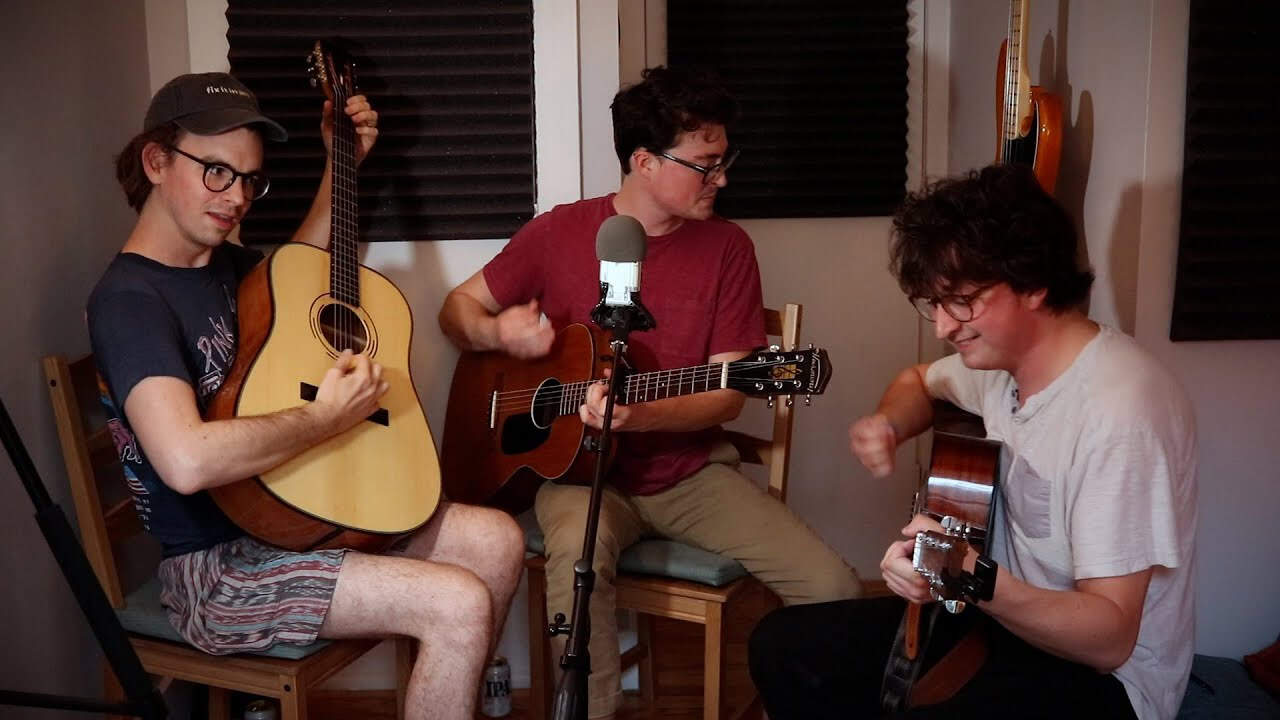
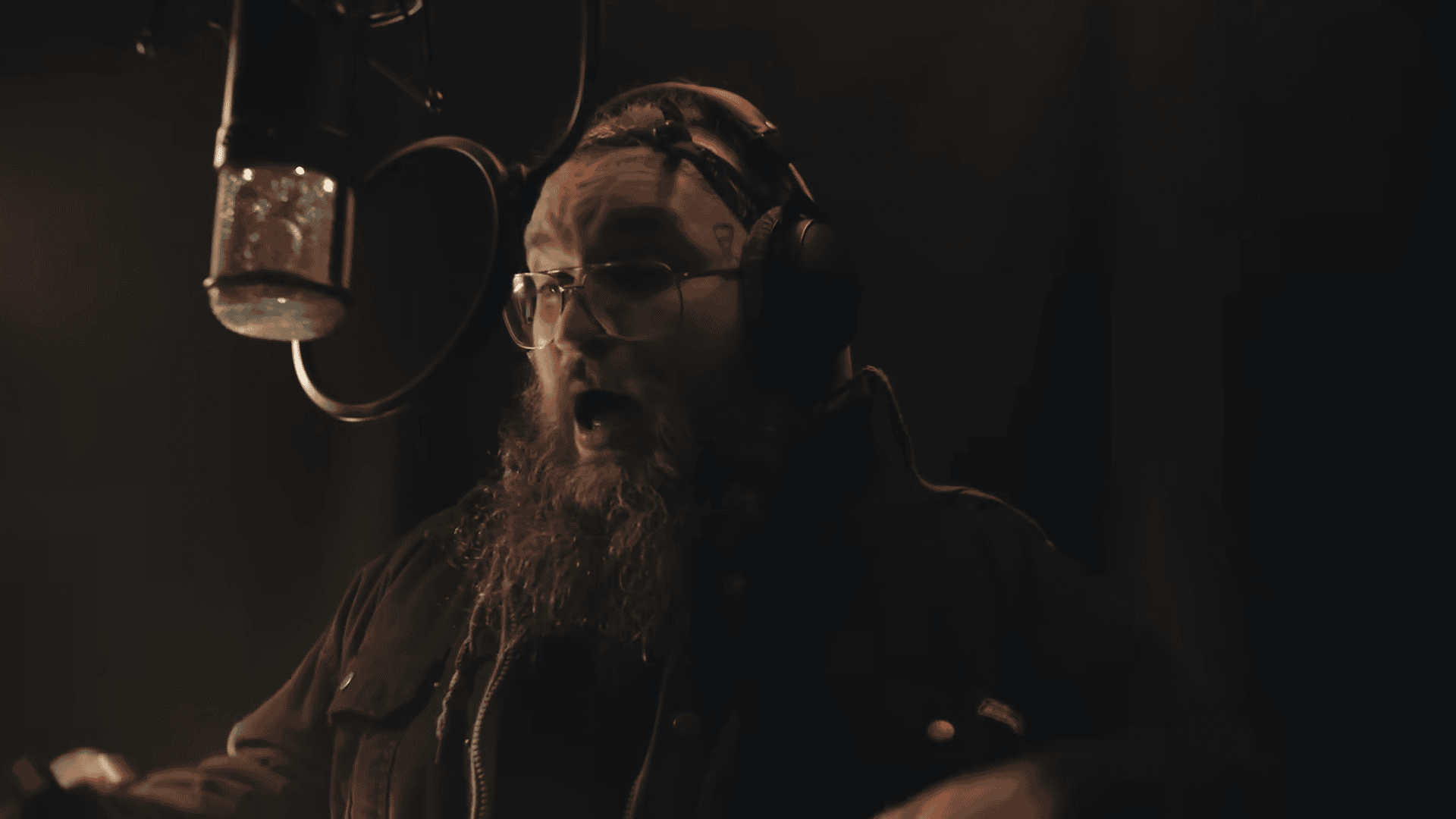
Some performances don’t feel like covers. They feel like visits. In a quiet studio filled with guitars, warm lamps, and the soft hum of amplifiers, Marc Martel sits at a piano, slips on his headphones, and leans into the microphone. No crowd. No stage lights. Just breath, memory, and a song that has lived in the hearts of millions for nearly fifty years.
“Love of My Life” begins gently, almost shyly. And within seconds, something extraordinary happens.
You close your eyes. And suddenly, Freddie Mercury is in the room.
This is the strange, beautiful magic of Marc Martel, a Canadian singer whose voice has become one of the closest living echoes of one of rock’s greatest legends. Born in Montreal in 1976 and now based in Nashville, Martel never set out to become “the man who sounds like Freddie.” He built his early career far from stadium rock, forming the Christian rock band Downhere in 1999 and winning Juno, Dove, and Covenant Awards long before Queen entered his story.
But destiny, it seems, had other plans. In 2011, Martel uploaded a simple audition video for Roger Taylor’s Queen Extravaganza project, singing “Somebody to Love.” Within days, it exploded online, collecting millions of views and stopping listeners cold. The resemblance wasn’t just close, it was uncanny. Queen themselves noticed. Soon came an appearance on The Ellen DeGeneres Show, a winning spot in the official Queen tribute tour, and years spent carrying Freddie’s songs across the world.
Still, nothing prepared audiences for what came next. When Hollywood set out to make Bohemian Rhapsody in 2018, the problem was nearly impossible: how do you recreate one of the most recognizable voices in music history? The answer, quietly, was Marc Martel. Recording for months at Abbey Road Studios, his vocals blended with Freddie’s original tapes and Rami Malek’s voice to bring the film to life. Producer Graham King later said, “You could close your eyes, and it’s Freddie.” The film might not have existed without him.
And now, here he is again, not in a stadium, not on a movie set, but alone at a piano, offering Queen’s most tender love song as a private confession.
The setting is intimate. Headphones frame his face. A leather jacket catches the soft studio light. Behind him, guitars rest like silent witnesses. There is no attempt at imitation, no theatrical gesture, no costume. Martel doesn’t perform Freddie.
He remembers him. The first lines float out slowly, carried on that unmistakable timbre, the gentle ache, the silver warmth, the familiar phrasing that once filled Wembley Stadium with voices singing back in unison. “Love of my life, you’ve hurt me…”
It’s not perfect in the polished sense. And that’s what makes it devastating. There are moments when his voice thins, when breath slips through the phrase, when the piano hesitates just a fraction longer than expected. These imperfections make the performance feel alive, human, and present. This is not a tribute meant to impress. It’s a love letter meant to be felt.
“Love of My Life” has always been one of Queen’s most personal songs, written by Freddie Mercury as a vulnerable confession, later transformed into a communal moment when tens of thousands of fans would sing the final verse back to him. In Martel’s hands, the song returns to its original shape: small, fragile, and honest.
And perhaps that’s why this performance hits so deeply. Because Marc Martel is not trying to replace Freddie Mercury. He never has.
After leaving Queen Extravaganza and forming his own tribute projects like One Vision of Queen and Ultimate Queen Celebration, Martel made something clear with every performance: this is preservation, not impersonation. He stands as a bridge between generations, carrying songs that refuse to fade, voices that refuse to disappear.
Fans understand this instinctively. The comments beneath this performance tell the same story again and again: disbelief, tears, gratitude. “I closed my eyes and heard Freddie.” “Thank you for keeping him alive.” “This brought me back to a night I’ll never forget.”
And in a way, that’s exactly what happens here. For four minutes, time bends. A song written decades ago breathes again. A voice long gone finds a new body. A legend steps softly back into the room, not to reclaim the spotlight, but to sit quietly beside a piano and remind us why we fell in love with music in the first place.
Some voices fade. Some voices echo. And some, through grace and devotion, find their way back to us, one last time.